Source flat bipolar igbt modules for Solar, Refrigerators, and Power Electronics
Explore 30 listings of flat bipolar igbt modules suitable for solar cells, refrigerators, and power electronic components. Buyers can compare specifications, certifications, and pricing to find reliable industrial automation solutions.
Key considerations
Products List


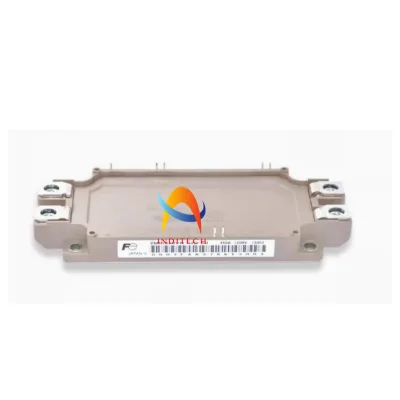


Comprehensive Sourcing Guide
Strategic Sourcing Guide for Flat Bipolar IGBT Modules
Understanding the Technical Landscape of IGBT Modules
When sourcing flat bipolar IGBT (Insulated Gate Bipolar Transistor) modules, buyers must first distinguish between the core semiconductor device and the broader system applications in which it operates. The market offers a diverse range of configurations, from discrete power semiconductor materials to integrated circuit devices designed for specific signal processing needs. The fundamental nature of these components often centers on their ability to handle high-power switching in industrial automation environments.
The technical specifications for these modules vary significantly based on their intended function. Some units are designed as general-purpose transducers, while others serve as high-performance transducers or high-frequency converter transducers. The control mode is a critical differentiator; buyers should verify whether a module utilizes V/F (Voltage/Frequency) control or Vector Control. Vector control is typically preferred for applications requiring precise torque management, such as textile machinery or constant torque universal types. Furthermore, the signal processing architecture can be digital, analog, or an analog-digital composite, which directly impacts the module's response time and accuracy in variable-frequency drive (VFD) applications.
The physical and electrical characteristics are equally vital. The input power supply voltage can range from low voltage to higher industrial standards, with specific frequency inverters often rated for 50/60Hz with a tolerance of ±5%. The main circuit type may be defined as current-based, and the link of transformation typically follows an AC-DC-AC variable-frequency drive topology. For applications involving solar cells, refrigerators, or radio frequency components, the module must be compatible with specific voltage variable-frequency drives. Buyers should also note that some modules are referenced to specific manufacturer families, such as Infineon, with designations like Pim, HP1, or DC, which can indicate pin configurations or internal architecture.
Compliance, Certification, and Material Standards
In the global supply chain, compliance is not merely a formality but a prerequisite for market access and operational safety. The sourcing guide for flat bipolar IGBT modules must prioritize verification of environmental and safety certifications. The most common certification observed in this sector is RoHS (Restriction of Hazardous Substances), which ensures that the modules do not contain restricted hazardous materials. Some advanced units may also carry CE certification, indicating conformity with health, safety, and environmental protection standards for products sold within the European Economic Area.
Material composition is another critical compliance factor. The core material for these modules is typically power semiconductor silicon, though the specific alloying and doping processes determine their efficiency and thermal characteristics. The manufacturing technology often involves integrated circuits, where digital signal processing is employed to manage the switching events. Buyers should verify that the "Made in China" origin aligns with the specific quality standards expected for industrial-grade components. While the origin is a known fact, the quality assurance associated with that origin must be validated through the supplier's documentation.
Packaging standards also play a role in compliance and logistics. Modules are frequently shipped in carton boxes or standard boxes, with dimensions often standardized to ensure safe transport. For instance, specific product standards might reference dimensions like 30cm20cm10cm for packaging, while the internal module dimensions might be specified as 72146109mm or 72200150.5mm depending on the power rating (e.g., 1.5KW or 0.75KW). These physical standards are essential for storage planning and integration into existing industrial racks.
Cost Drivers and Pricing Dynamics
The pricing of flat bipolar IGBT modules is influenced by a complex interplay of factors, including the specific model number, power rating, and the level of customization required. The observed market price range for these components spans from $0.50 to $300.00 USD. This wide variance is not arbitrary; it reflects the difference between basic discrete components and complex, high-performance modules with advanced signal processing capabilities.
Several key drivers influence where a specific module falls within this price band. First, the power rating is a primary determinant. A 0.75KW module will generally cost less than a 1.5KW or higher capacity unit, as the latter requires more robust semiconductor materials and larger die sizes. Second, the control complexity affects cost. Modules featuring vector control or those designed for high-frequency conversion often command a premium over simple V/F control units. Third, the degree of customization plays a significant role. While many standard models are available, the ability to customize the module for specific industrial automation needs can increase the unit price.
The Minimum Order Quantity (MOQ) also impacts the effective cost per unit. The observed MOQ range spans from 1 piece to 1000 pieces. Buyers purchasing small quantities, such as a single piece for prototyping or replacement, may face a higher per-unit cost compared to bulk buyers who can leverage economies of scale. However, the flexibility of an MOQ of 1 piece allows for lower risk in initial testing phases. Buyers should also consider the warranty terms, which are typically standardized at 1 year for these components. A longer warranty period might indicate higher confidence in the manufacturing process but could also be reflected in the initial purchase price.
Typical Applications and Performance Requirements
Flat bipolar IGBT modules are ubiquitous in modern industrial automation, serving as the backbone for various power conversion systems. Their application scope is vast, ranging from general transducers to specialized high-performance transducers. One of the most common applications is in the textile industry, where constant torque universal types are required to maintain consistent speed and torque under varying loads. Similarly, in the food and beverage sector, these modules are essential for refrigerator compressors, ensuring efficient temperature control.
The versatility of these modules extends to renewable energy and consumer electronics. In solar cell systems, IGBT modules manage the conversion of DC power generated by panels into usable AC power. They are also integral to LCD display controllers and radio frequency applications, where precise signal processing is necessary. The ability to function as a single-phase transducer or a three-phase transducer makes them adaptable to different grid configurations and motor types.
Performance requirements are dictated by the operating environment. The storage environment for these modules is typically specified between -40℃ and +70℃, ensuring reliability in extreme conditions. Vibration resistance is another critical factor, with many modules designed to withstand vibrations of less than 0.5g. This robustness is essential for applications in moving machinery or transportation systems. The principle of work often relies on vector control transducers, which provide superior dynamic response compared to scalar control methods. Buyers should ensure that the selected module matches the specific application's demand for frequency conversion, whether it is a general transducer or a high-frequency converter transducer.
Supplier Evaluation and Quality Assurance
Evaluating a supplier for flat bipolar IGBT modules requires a rigorous approach that goes beyond simple price comparison. The quality of the product is paramount, and buyers should look for suppliers who explicitly state that their products meet "Good" quality standards. While the term "Good" is subjective, it serves as a baseline expectation for industrial components. Buyers should request detailed quality assurance documentation that verifies the condition of the product, which is typically "New" for fresh inventory.
The manufacturing process is a key indicator of supplier reliability. Suppliers utilizing integrated circuits device technology and digital signal processing capabilities are generally better equipped to handle the complexities of modern power electronics. Buyers should verify the supplier's adherence to specific standards, such as the IGBT standard, and ensure that the product model numbers align with the technical requirements of the project. For example, models like FS225R17KE4 or K90-2S-1.5G represent specific configurations that must be matched to the application's voltage and current requirements.
Supplier transparency regarding the product origin is also crucial. While many components are manufactured in China, the consistency of quality can vary between different facilities. Buyers should inquire about the specific manufacturing technology used and whether the supplier offers any form of traceability for the components. Additionally, the availability of customization services is a significant differentiator. Suppliers that offer "Yes" for customization can tailor the module to specific needs, such as unique pin configurations or specific packaging requirements, which can be vital for specialized industrial automation projects.
Long-Term Procurement and Operational Considerations
Sourcing flat bipolar IGBT modules is not a one-time transaction but part of a long-term procurement strategy. Buyers must consider the lifecycle of the components, including their warranty and support. A standard 1-year warranty provides a baseline for protection against manufacturing defects, but buyers should also evaluate the supplier's after-sales support capabilities. This includes the availability of replacement parts, technical assistance for troubleshooting, and the ability to source specific models like the N3 or W2 variants if they become obsolete.
Inventory management is another critical aspect. The packaging standard, such as the carton box or box, must be compatible with the buyer's storage facilities. The dimensions of the packaging, such as 34mm: R or specific metric measurements, should be accounted for in warehouse planning. Furthermore, the storage environment requirements, specifically the -40℃ to +70℃ range, must be maintained throughout the supply chain to prevent degradation of the power semiconductor material.
Future-proofing the procurement strategy involves staying informed about technological advancements. As the industry moves towards more efficient signal processing and higher frequency inverters, buyers should select suppliers who are committed to innovation. The ability to adapt to new standards, such as updated RoHS directives or new CE requirements, ensures that the procurement remains compliant over time. Additionally, buyers should monitor the market for changes in MOQ policies and lead times, as these can impact production schedules and inventory costs. By maintaining a strategic relationship with suppliers who offer high-quality, compliant, and customizable IGBT modules, buyers can ensure the reliability and efficiency of their industrial automation systems.
Summary of Key Specifications and Verification Points
To facilitate a streamlined procurement process, buyers should utilize the following summary of key specifications and verification points when evaluating flat bipolar IGBT modules. This table consolidates the critical attributes observed in the market to aid in decision-making.
| Attribute Category | Key Verification Points | Typical Values/Observations |
|---|---|---|
| Product Model | Verify specific model numbers against application needs. | FS225R17KE4, N3, W2, K90-2S-1.5G, K100-4T-0.75GB |
| Certification | Confirm environmental and safety compliance. | RoHS, CE |
| Application | Match module type to industry sector. | Industrial Automation, Solar Cell, Refrigerator, Textile |
| Control Mode | Determine required control strategy. | V/F Control, Vector Control |
| Power Rating | Check voltage and power capacity. | 220V 1.5KW, 380V 0.75KW |
| Signal Processing | Identify processing architecture. | Digital, Analog Digital Composite |
| Packaging | Verify dimensions and material. | Carton Box, Box (e.g., 30cm20cm10cm) |
| Warranty | Confirm coverage period. | 1 Year |
| Origin | Verify manufacturing location. | China / Made in China |
| Customization | Check availability of tailored solutions. | Available / Yes |
By adhering to these verification points and understanding the technical, compliance, and operational nuances of flat bipolar IGBT modules, buyers can make informed decisions that align with their specific industrial automation requirements. This structured approach ensures that the sourced components meet the rigorous demands of modern power electronics applications while maintaining cost efficiency and long-term reliability.
FAQs
What is the warranty period for these modules?
The warranty period is 1 year for these flat bipolar IGBT modules. This coverage applies to new condition units sourced from suppliers offering good quality standards and verified manufacturing processes.
Can I find customized flat bipolar IGBT modules?
Yes, customized flat bipolar IGBT modules are available for specific industrial automation needs. Buyers can request customizations while ensuring the product meets the required signal processing and material standards.
Which certifications do these modules typically hold?
These modules typically hold RoHS certification and some may also have CE certification. These standards ensure compliance with hazardous substance restrictions and safety requirements for the European market.
How does the control mode affect performance?
The control mode affects performance by determining if the module uses V/F control or Vector Control. Vector control is preferred for applications requiring constant torque, such as textile machinery or high-performance transducers.
What is the minimum order quantity for purchase?
The minimum order quantity can be as low as 1 piece for prototyping or replacement needs. However, bulk orders may range up to 1000 pieces depending on the specific supplier and pricing structure.
Where are these modules manufactured?
These modules are manufactured in China. The origin is explicitly stated as Made in China, and buyers should verify that the quality standards align with industrial automation requirements.
What is the storage temperature range for these units?
The storage temperature range is from -40℃ to +70℃. This ensures the power semiconductor material remains stable and functional when stored in various industrial environments.